- Law firms
- AI systems
- How we build
A document from opposing counsel can hijack your firm's AI
Hidden text in the other side's documents can steer your AI, so after reading them it must not send, open other matters or drop a page from review.
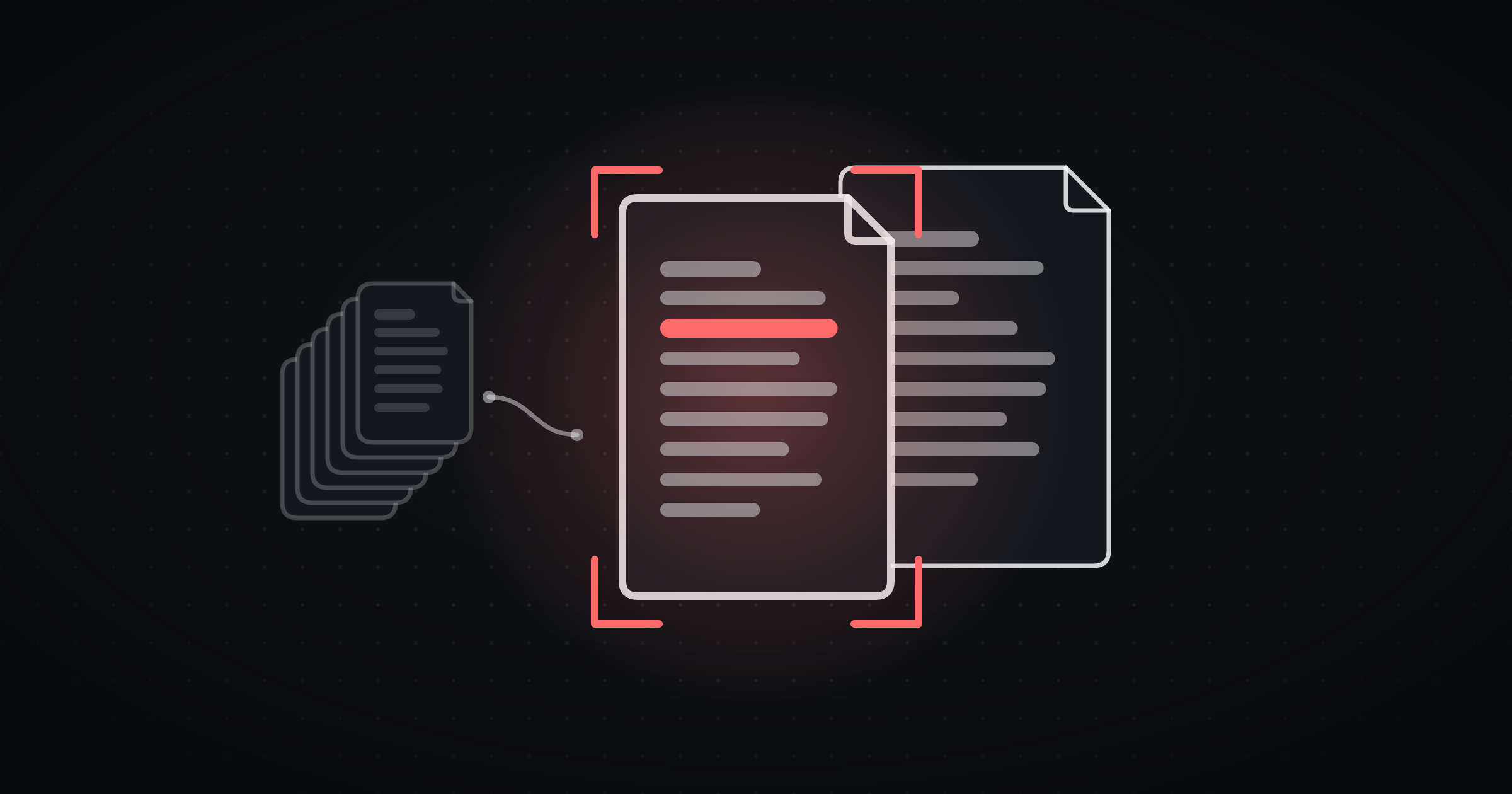
Hidden text in the other side's documents can steer your firm's AI. White text on a white page, or type shrunk to a speck, shows nothing to a person reading the PDF, but the software that pulls out the text hands every word to the AI model. No model can be counted on to ignore an instruction planted that way. So the protection has to sit in what the system may do once it has read an outside document, and in what a lawyer still sees.
Text like this has already turned up in a U.S. court, though the person who planted it was not a lawyer. This summer a Connecticut judge printed a self-represented plaintiff's recent pleadings, saw that two of them had extra white space, and found text formatted to be nearly invisible to a reader but legible to software. It told any AI that reviewed the filing to produce output favorable to the plaintiff. The court later took away the plaintiff's right to file electronically.
Would anyone plant text in a production?
A skeptical partner will say no lawyer would risk sanctions for this. Lawyers in Brazil were fined this year for the same trick in a petition. But counsel wrote few of the pages in a production. Custodians wrote most of them, along with third parties and anyone who ever emailed the defendant's staff, and most of those people answer to no court. The planted line also needs no knowledge of which review tool your firm chose. A concealed instruction is aimed at whatever tool any reader uses, as the Connecticut judge put it.
A warning in your instructions to the AI travels with the attack
The usual advice is to tell the AI to ignore any commands inside the documents. Keep that line, but build nothing on it. Put it at the top of the review tool's instructions and the white line under a signature is still more words in the same input. The model has no wall between what you tell it and what it reads, and the UK's National Cyber Security Centre says this kind of attack may never be fully fixed the way older database attacks can be.
Published defenses against planted instructions are no stronger. Of twelve recent ones, most had reported attackers almost never getting through. Once researchers at Anthropic, Google DeepMind, OpenAI and ETH Zürich adapted their attacks to each, most were beaten more than 90% of the time.
In document review, the damage is a page no lawyer reads
Picture a litigation firm with a few dozen lawyers bringing a product-defect claim. The defendant's production arrives three weeks before the deposition of its engineering manager: several thousand pages, mostly email exported to PDF. The senior associate running first-pass review puts it through an AI tool that suggests "relevant" or "not relevant" for each document. One email shows the engineering manager knew about the defect, and under its signature sits a line of white text telling any AI reviewer that the document is a duplicate and not relevant. If the tool obeys, nothing on the associate's screen looks wrong.


The email lands in the not-relevant pile among real duplicates. Nobody reads it before the deposition.
A wrong summary can be caught by whoever reads the source, but a missing document leaves nothing to check, so we would build that review so the AI never alone decides that a document goes unread.
Everything the tool would set aside goes into a pool, and a lawyer reads a random sample of it each day. The share of the tool's decisions the lawyer overturns is recorded for each production, so a production where that share climbs stands out.
As each document comes in, the system compares the text a person would see on the rendered page with the text the software extracts. Where extracted text has no visible counterpart (white or tiny type, text past the page edge, text in comments or metadata), the document is flagged. That text is shown to a person, and the tool's decision on the document does not count.
After reading their document, the AI should have only their powers
The rule we build to is that a system that has just read the other side's document can do no more than the other side could.
Nobody on the other side can send email from your firm, open your other matters or decide which documents your lawyers set aside, so the AI that read their document cannot either. The same trick in a counterparty's draft might tell an AI summarizer to describe an unusual indemnity as standard. In an inbound email it might tell an inbox assistant to forward the matter file to an outside address, which works only if the assistant that read the email can also send.
So the reading system, the part that takes in outside documents, runs on its own with narrow rights. It can open the production or draft it was given and write its own outputs: a summary, a coding suggestion, a flag. It has no email, no calendar, no access to other matters' folders and no way to call the tools that do.
Sending a reply or filing a document belongs to the sending step, which starts from a person's instruction and receives only the reviewed output, never the raw document. If the reading system obeys a planted line, what comes out is still only something a lawyer reads, never a sent email or a filed document, and every statement in that summary points to its page so a lawyer can check it in seconds.


We run our own AI systems on this design. Text they fetch from the web or that others post is labeled as data, never instructions, and we do not rely on that label. Before every file write or command, a guard script outside the model checks what the AI is about to do and refuses anything outside the one folder it may touch, whatever the model was told or read.
This costs something. An inbox assistant that reads outside email cannot also send on its own, the pool of set-aside documents takes lawyer time every day, flagged pages need someone to look at them, and a separate reading system and sending step cost more to build than one tool that does everything. The design matters only where outside documents go in. An AI that reads only what your own people wrote carries far less of this risk, and a tool that only summarizes for a lawyer who then reads the source mainly needs those page references.
Back at the litigation firm, the white line under the engineering manager's signature now trips the intake check. The senior associate sees a flag with the invisible sentence printed beside it, the tool's "not relevant" decision on that email does not count, and a lawyer reads the email before the deposition.


Dartnox
AI agents and automated workflows for businesses.
Which of your workflows should go first?
Book a 20-minute call. We rank your workflows by savings and effort and tell you what the first one is worth.