
- Professional services
- Evaluation
- AI systems
When your AI search cites last year's clause, nothing in the wording shows it
As old versions pile up, AI search answers read the same. Rerun a fixed set of answered questions monthly and check each cites the current document.
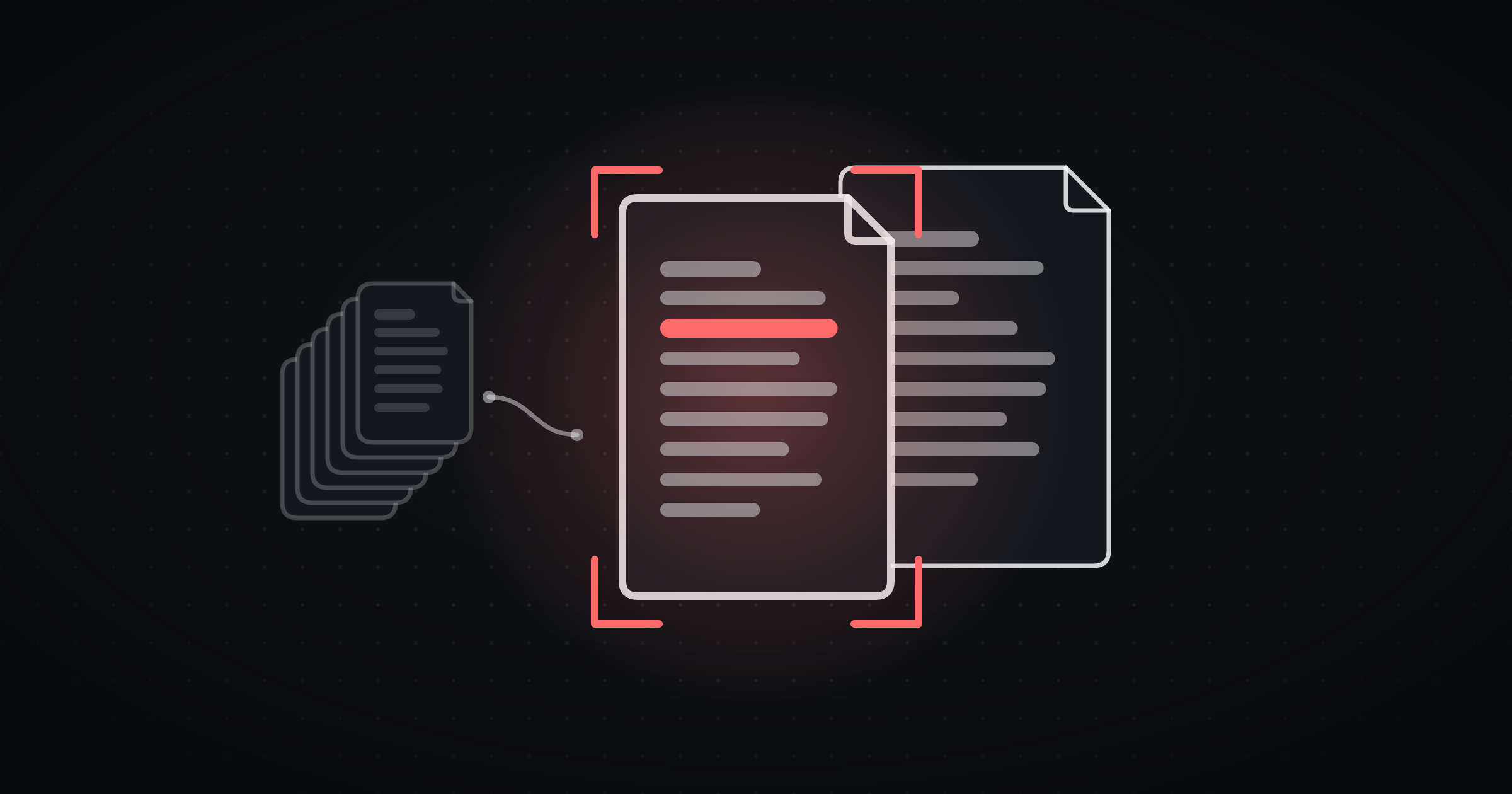
An AI search tool over your firm's documents is easiest to trust on the day of the demo, and nothing in its answers will tell you when that stops being justified, because a wrong answer arrives in the same fluent paragraph as a right one, with a citation underneath. The check that works is your firm's own fixed set of questions with known answers and known source documents, rerun every month. Build it before the tool goes live.
Your own document habits are what move the answers
A demo runs on a small, tidy index (the store of documents the tool searches): one version of each precedent, and questions the person running it already knew the answers to. Your document management system is nothing like that. Every week it takes in drafts, redlines, the client-specific version of a template and next year's update of last year's research memo. The search works by finding the passages that look most like the question and handing them to the model to write an answer from. Every near-duplicate you index is one more passage that can rank above the right one.
Say a mid-sized commercial and employment firm has its standard confidentiality clause in the index four times: the current template, a variant drafted for one client, last year's version and a redline from a negotiation. An associate asks what the firm's standard position is. The search hands the model whichever passage looks closest to the question, and the model writes a clean answer from it. If that passage was last year's version, the answer still cites a real firm document. It looks checked. The associate has no reason to open it.
Nothing in the wording changes when the passage behind it does. Lawyers who say they like the tool are telling you how it reads, which stays the same. The check that catches last year's clause is a rerun of questions whose right answers you already know.
The vendor's testing never sees your files
A small firm will reasonably say that nobody has time to build and rerun a test set, and that the vendor already tests its product. But the vendor's tests run on the vendor's documents. They have never seen your four versions of your own clause, so they cannot tell you which one your index will rank first next month. Vendor accuracy claims need checking too: when Stanford researchers tested AI research tools from established legal publishers, tools that look up sources before they answer, more than one question in six drew a misleading or false answer, and the providers' claims proved overstated.
As for the time, most of the test set is already written.
Your test set is already in your files
Every research memo, opinion letter and "what's our standard position on this" email that a lawyer wrote and checked is a question with a known answer and a known source document. Collecting forty of them takes an afternoon.
In the example firm, the knowledge lawyer pulls 40 past research memos from both practice groups, since commercial and employment lawyers ask different questions of different documents, and logs each one in a spreadsheet: the question in the words a lawyer would type, the right answer in one sentence, and the document and version that answer must come from. She adds a few questions whose honest answer is that the firm has nothing on the point, to catch the tool inventing something. After that the set stays fixed and grows only by adding questions, so each month's result compares like with like.
Score each answer by the document it cites
In a Dartnox project building cited answers over a company's own data, the demo was the easy part. Keeping answers accurate in month six needed evaluation of answer quality and monitoring built in from the start, with a citation on every answer as the first requirement.
We would set up a firm's search tool the same way: the citation on every answer first, then the test set and the monthly check. Every answer shows the passage and the document it came from, which turns checking into a few seconds of reading for the lawyer using it. It also makes the monthly scoring mechanical: the scorer compares the cited document with the expected one and never has to judge how well the answer reads. An answer without a citation cannot be scored this way, which is why citations come before speed or coverage.
The example firm refreshes the index once a month. On the first business day after each refresh, the knowledge lawyer runs all 40 questions and records four things for each:
- whether the answer cited the expected document;
- whether it cited the current version of that document;
- whether the cited passage supports what the answer says;
- whether the tool said it had nothing when it should have.
The number to watch is the share of answers that are correct, cited and current, set against last month's. A drop, or any single answer that cites an older version, sends someone to look at what was indexed that month. Usually it is a batch of drafts or a migrated folder, and fixing that comes before anyone changes the tool's instructions or swaps the model underneath it.
The cost is an afternoon to build the set, then an hour or two a month to rerun and score it, less once the comparison against the expected document is automated. The tool also goes live a week or two later than the vendor proposed.


A firm whose tool searches one practice group's small precedent bank, which rarely changes, can check once at launch and stop there. So can a team where a lawyer already reads every answer against its source before relying on it, because a miss there is already caught by the person who reads the source.


For everyone else, the monthly hour buys a number the firm did not have before. When the associate next asks whether the tool can be trusted on the standard confidentiality clause, the knowledge lawyer answers from this month's row of the spreadsheet, which shows whether the tool cited the current template or last year's.
Dartnox
AI agents and automated workflows for businesses.
Which of your workflows should go first?
Book a 20-minute call. We rank your workflows by savings and effort and tell you what the first one is worth.